Season by Season
Estero sits in a mild temperate band
So you don't get the hard freeze-thaw cycles that crack concrete slabs and heave track brackets loose up north. That's the good news. The bad news is a long, humid stretch of the year that swells wood door jambs and trim, which pushes the vertical tracks out of plumb a few degrees at a time. You don't notice it happening. You notice the door start to shudder on the way up, or the rollers start chattering in the track about two feet from the top.
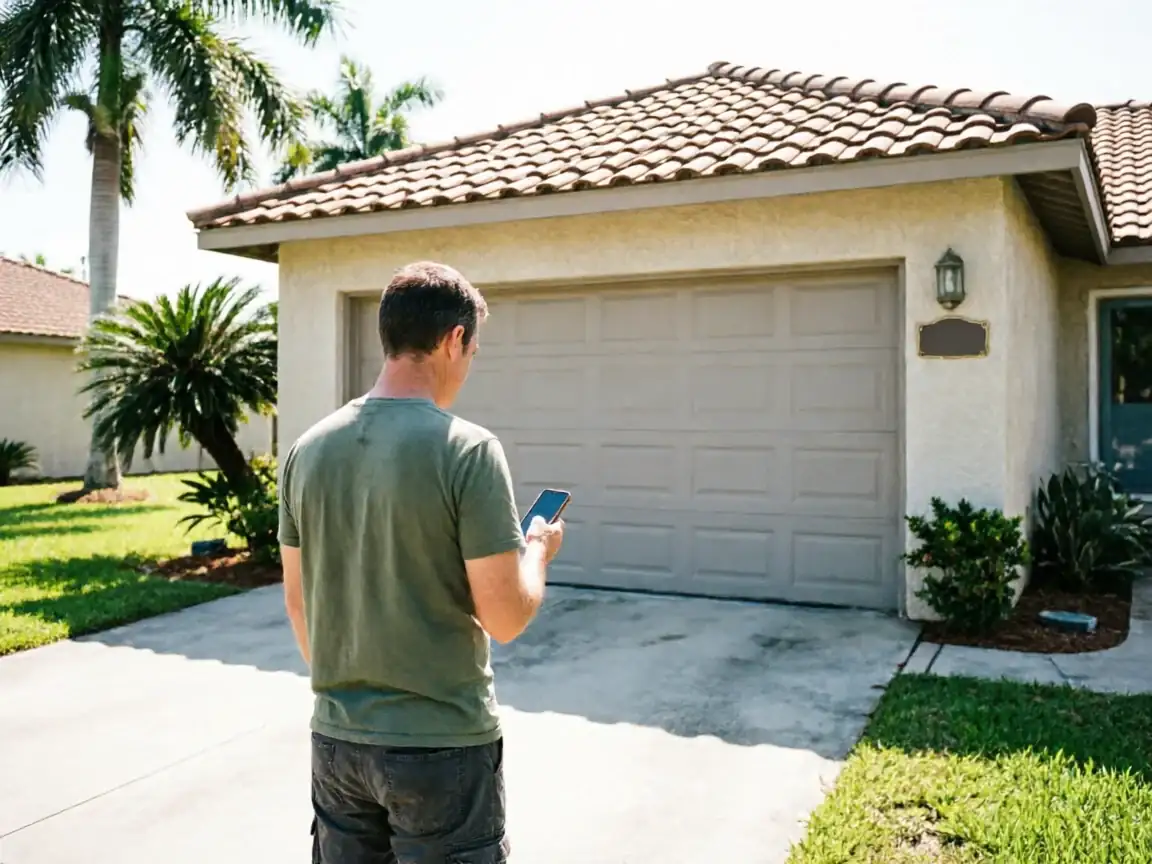
Most of the housing in this area went up between 1970 and 2006
With the typical build year landing around 1986. A door that old has been through close to forty humid seasons of that jamb movement, and the track brackets were lag-bolted into wood framing that's moved with it every year. There's no single storm that does this. It's cumulative - the same slow drift that eventually walks a bracket's lag screws loose enough that the track leans, and a leaning track throws rollers.
There isn't really an off-season here for this kind of wear
It just keeps happening at roughly the same rate year-round, which is different from a lot of the country where damage front-loads into one brutal month.
What You Pay
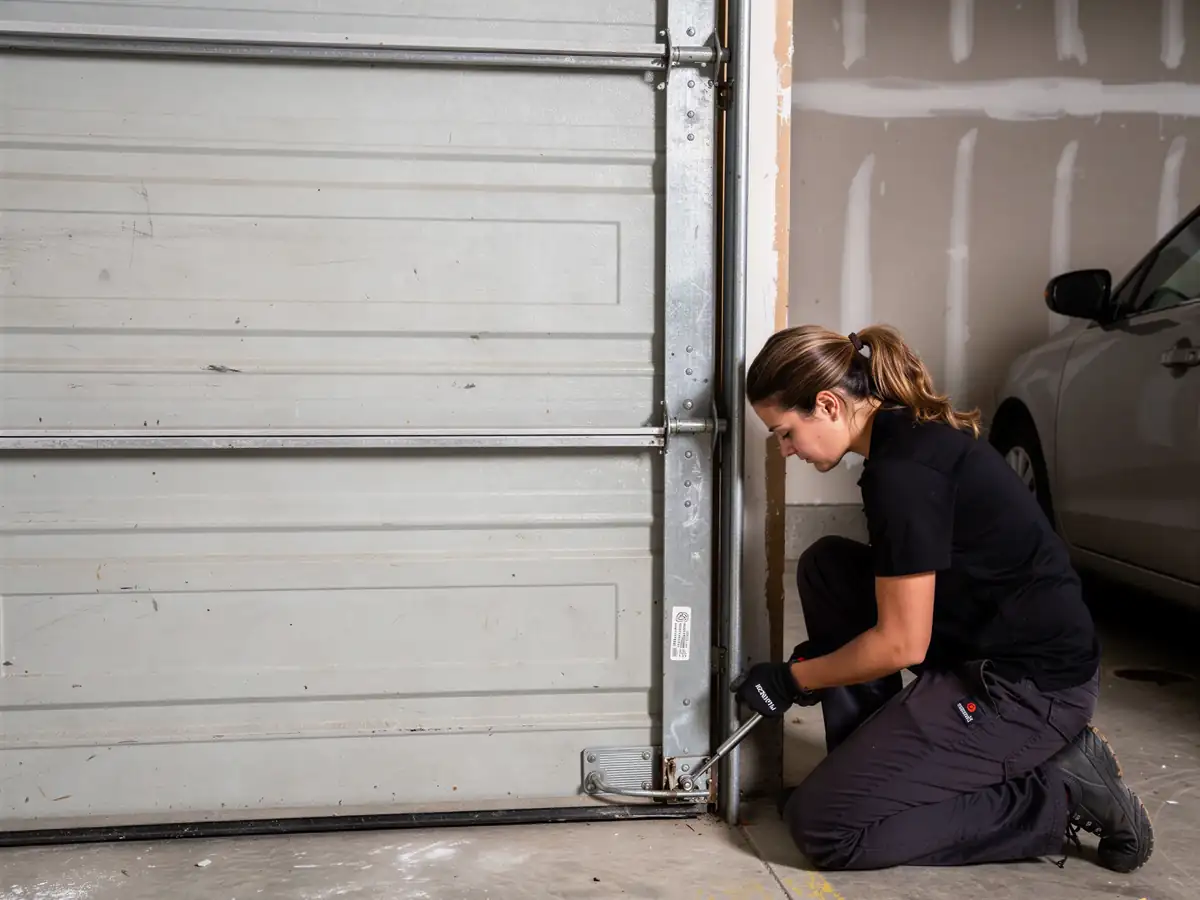
I don't have a flat rate to hand you here, and I'd rather tell you that than guess. What drives the cost on a track job is usually how far the bracket damage has spread, not just the bent rail itself. If it's one section of track knocked loose from a roller jump, that's a contained repair. If the lag bolts have worked loose in the jamb the way they tend to on houses from the 1980s and 90s stock common across this area, you're also re-anchoring the bracket into solid wood, sometimes with a backer plate, which is more labor than parts.
With a median household income of $92,575 across the area, most owners I talk to would rather pay for that bracket repair now than let the door keep running crooked until a cable or a roller gives out too and turns a one-part fix into three. That's the honest math on it - a track problem caught early is cheap compared to what it drags down with it.
I won't quote a number without seeing the door. Anyone who does that over the phone is guessing, and a wrong guess either lowballs you into a surprise or scares you off a job that was actually small.
What the Weather Here Does to It
The mild temperate climate here isn't hard on metal the way a true freeze-thaw region is - you won't see track rail crack from ice expansion. What you get instead is slower and sneakier: humidity that never really lets up pulls moisture into the wood framing the track brackets are bolted to, and that wood swells and shrinks through the year even though the temperature swing is mild. Each cycle loosens the lag screws a fraction more.
Salt-tinged air moving in off the Gulf side of this region also speeds up surface rust on exposed track bolts and hinge pins faster than it would somewhere landlocked. Rust doesn't bend a track, but it locks a bracket in a slightly wrong position once it's drifted, because the bolt won't turn anymore to let you true it back up.
So the failure pattern here isn't a sudden storm event - it's a bracket that's been quietly walking looser for a decade, and a track that's been running a few degrees out of true long before the rollers finally jump it. That's worth knowing because it means catching it is about noticing the small chatter, not waiting for a dramatic breakdown.
What Is Going On
When a door goes off track, nine times out of ten the track itself didn't fail
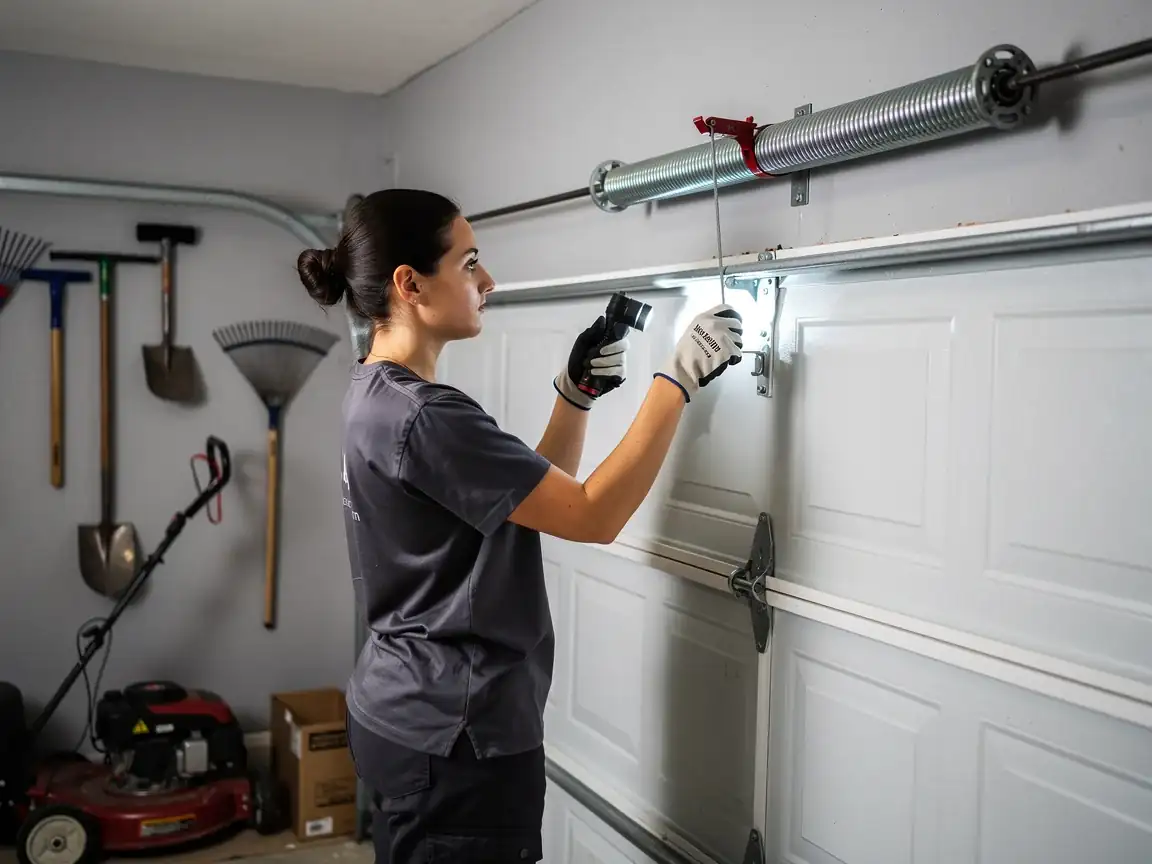
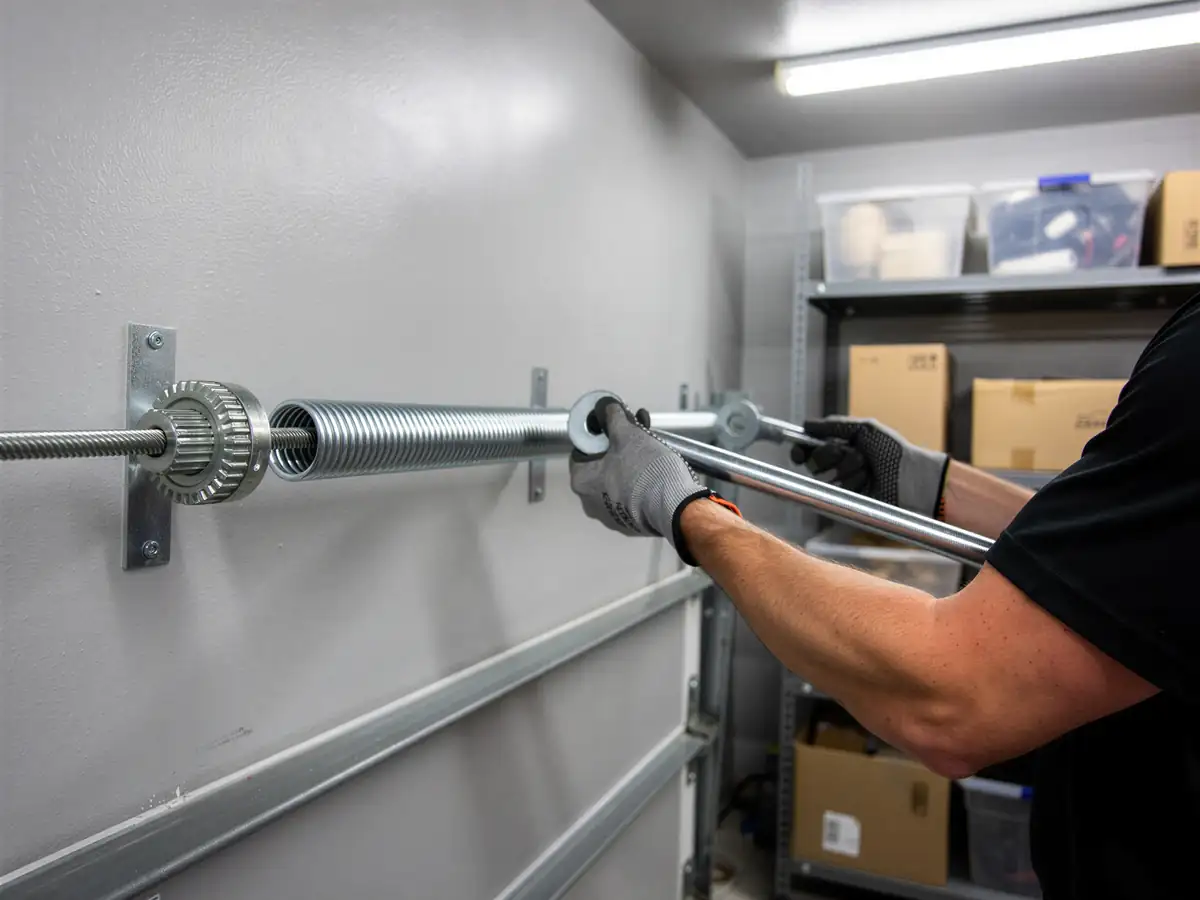
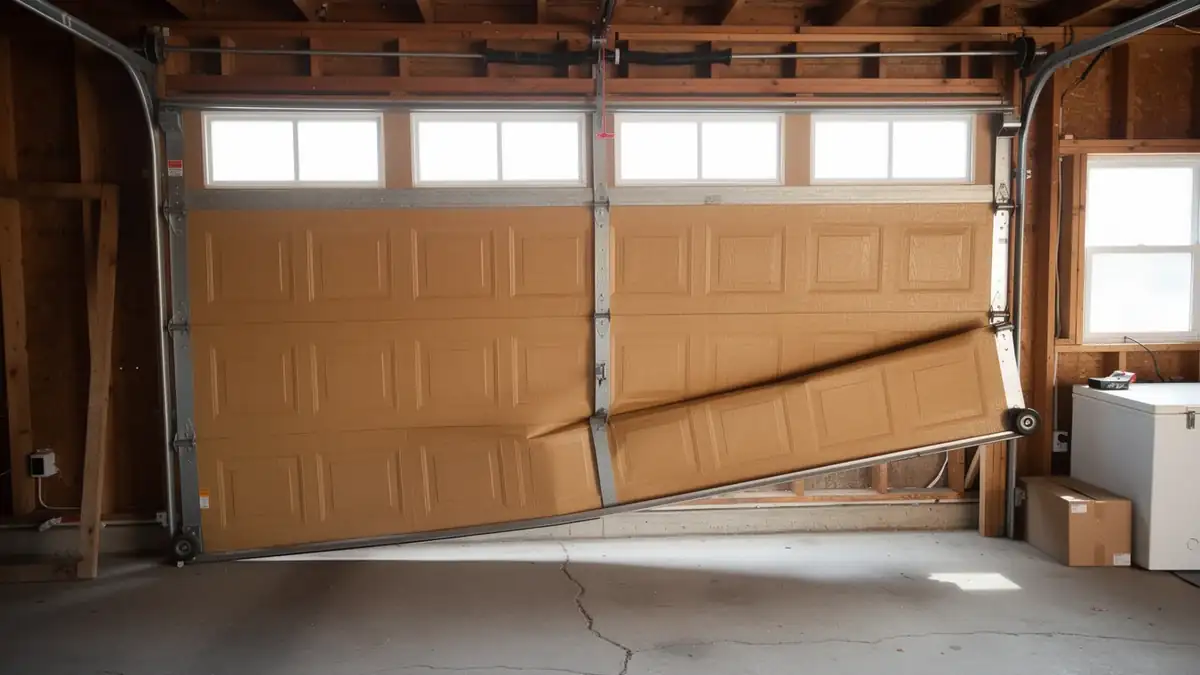
The thing holding the track in place did. The vertical rails bolt to wood jamb framing through brackets, and those brackets are only as good as the screws seated in that wood. Houses here built in that 1970-2006 window, median around 1986, used standard lag screws into standard framing, and decades of humidity-driven wood movement is exactly the kind of slow stress that backs a lag screw out a sixteenth of an inch at a time.
Once a bracket shifts, the rail leans
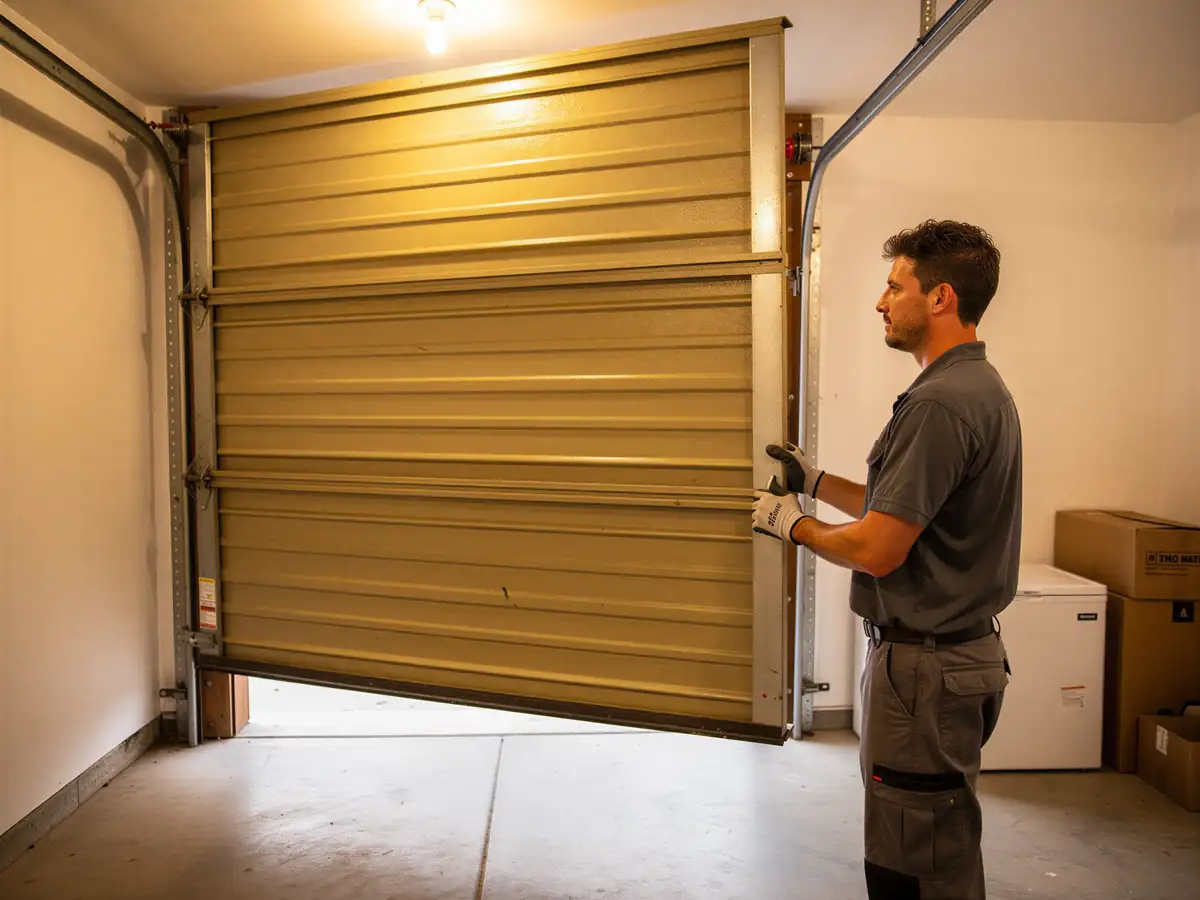
Once the rail leans, the rollers ride against one lip of the track instead of rolling square in the channel, and eventually one jumps clean out, usually on the way down when the door's weight is working against gravity instead of with it.
The honest limitation here
If the jamb wood itself has rotted or delaminated behind the bracket, re-anchoring the same bracket won't hold for long - that calls for opening up the trim and sistering in new framing before the door goes back on, and that's carpentry, not a garage door repair. I'll tell you straight if that's what I'm looking at rather than bolt a bracket into wood that won't hold it.