Why Garage Door Springs Fail in Estero, Even Without Real Cold
How Estero's mild climate and 1970-2006 housing stock affect garage door springs, what repairs run, and why cold fronts still snap tired torsion springs here.
Estero sits in a mild temperate band, so you're not dealing with the hard freezes that snap springs outright the way they do up north. But the swing still matters. Summer here runs hot and humid for months, and that heat keeps steel expanded and under slightly different tension than it was built for. Then a cold front drops through, usually in January or February, and the temperature can fall 20-30 degrees in a single evening. That's the window we see the most calls. A torsion spring that's been flexing all year in heat and humidity, then gets hit with a sudden cold snap, loses what little give it had left. It's not the cold itself that breaks it - it's the shock of going from one extreme to the other after months of corrosion creep. Spring and fall are quieter. The temperature holds steadier, humidity eases off a little, and springs that are going to fail usually don't pick those months to do it. If your door is making a new noise going into winter, that's the time to get it looked at, not after the first cold front already did the damage.
What You Pay
I don't have a price list to hand you here, and I'm not going to make one up. What a spring job costs depends on whether you've got one torsion spring or two, what size door, and whether the drums or bearings went with it. Anyone who quotes you a number sight unseen is guessing. What I can tell you is that Estero's median household income sits around $92,575, which tells you this is a market where people fix things properly rather than patch them - most of the jobs we see are full spring replacements, not single-spring band-aids on a two-spring door. That approach costs more up front and less over the next five years. The honest limitation: if your opener is also grinding or your track is bent, that's a separate diagnosis, and I'm not going to roll it into a spring quote just to make one number sound simpler.
What the Weather Here Does to It
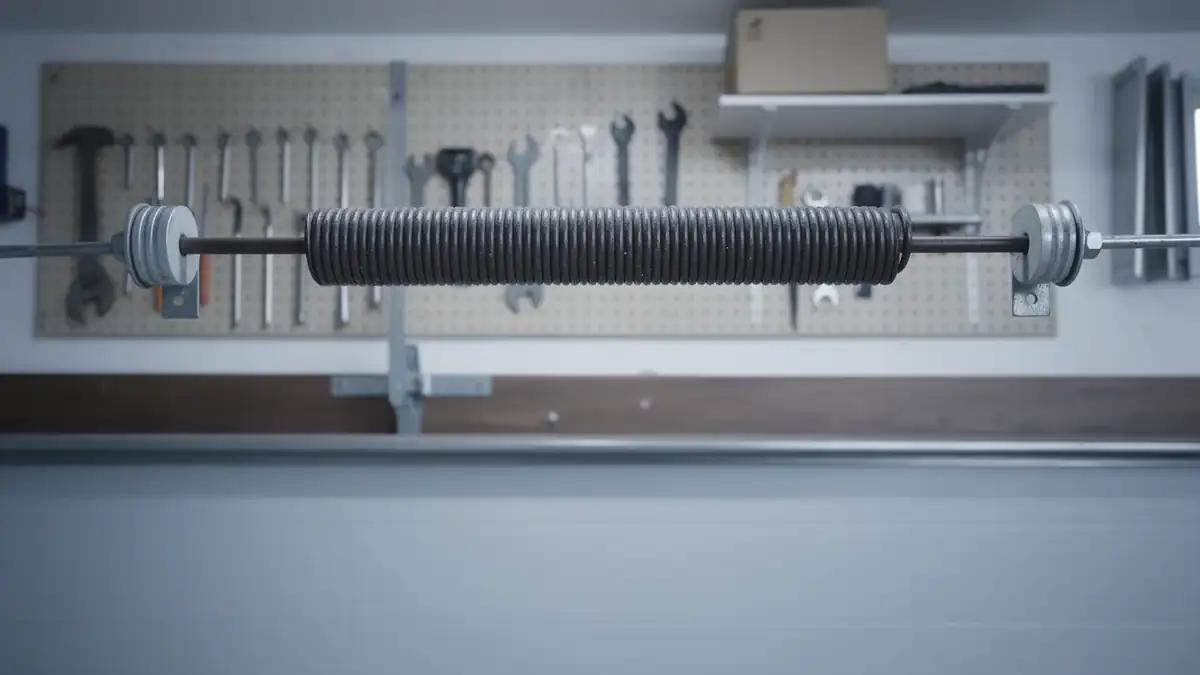
Mild temperate doesn't mean gentle on hardware. It means long stretches of humidity that work on bare steel year-round, not just in a few wet months. Torsion springs here corrode from the inside of the coil out, slowly, and you usually can't see it until the spring is already thin enough to go. Combine that with the heat-cycling from Gulf Coast summers - doors baking in a closed garage all afternoon, then cooling fast after a storm rolls through - and you get metal fatigue that has nothing to do with age on paper and everything to do with what the coil has actually been through. A spring rated for a certain number of cycles in a dry, stable climate doesn't get that same lifespan in this kind of humidity and heat-swing. That's the piece people from drier states don't expect when they move to this corner of Lee County.
What Is Going On
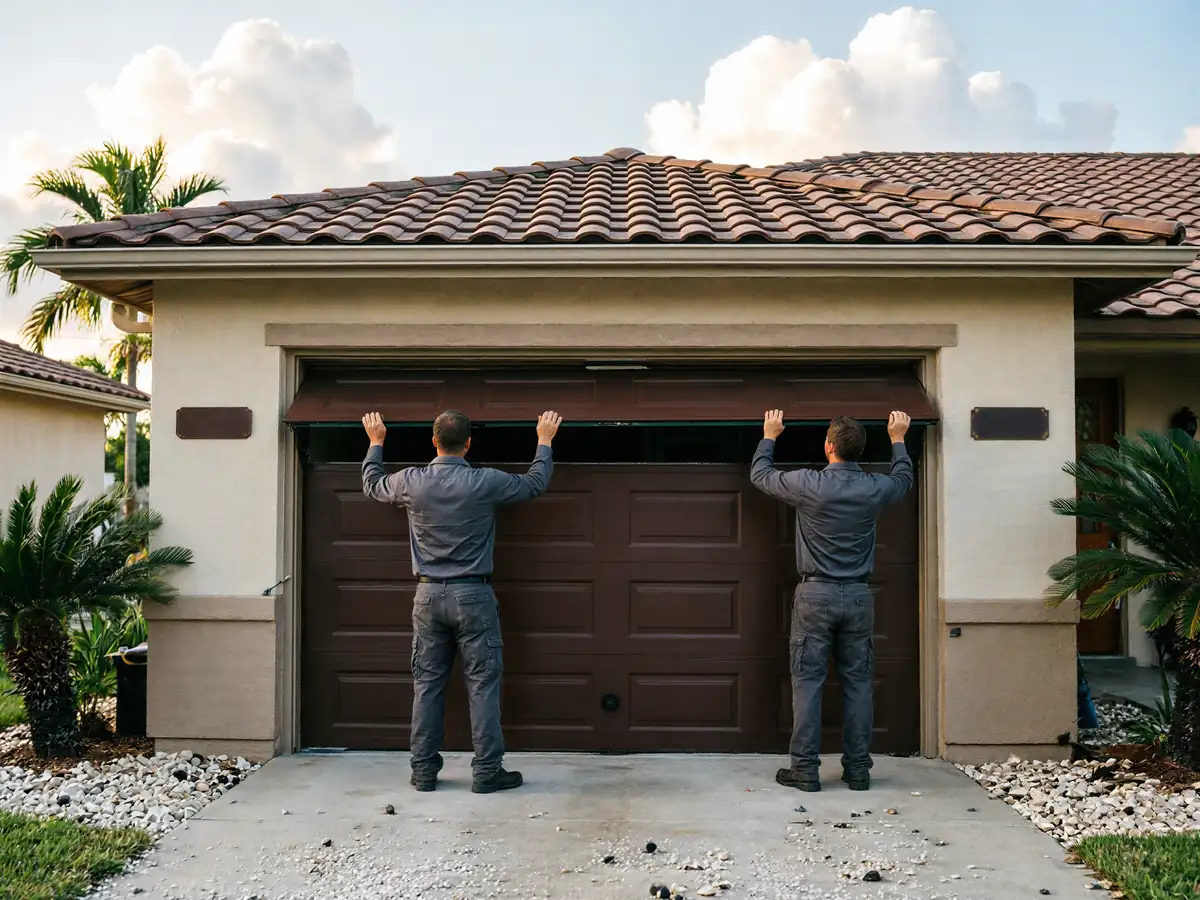
Most of the houses we work on here were built between 1970 and 2006, with the bulk of that stock going up in the 1980s and 90s. That matters because a house built in 1986 is pushing forty years on its original torsion hardware if nobody's ever swapped the spring, and a lot of owners genuinely don't know what's original and what's been touched. We see this across the service area - in close around Three Oaks, three miles out, and out toward San Carlos Park a few miles further - the same vintage of door shows up again and again: steel torsion springs on a standard double garage, builder-grade, never upgraded. When one of those finally lets go, it's not a mystery. It's forty years of Gulf Coast humidity and heat-cycling catching up with a part that was never rated to last that long in this climate to begin with. If your garage still has the door it was built with, the spring inside it is the oldest piece of mechanical hardware on your whole house.
How it works
From “it’s stuck” to “it’s fixed”
01
Tell us what’s wrong
Describe the symptom - won’t open, loud bang, opener runs but the door won’t move.
02
On-site diagnosis
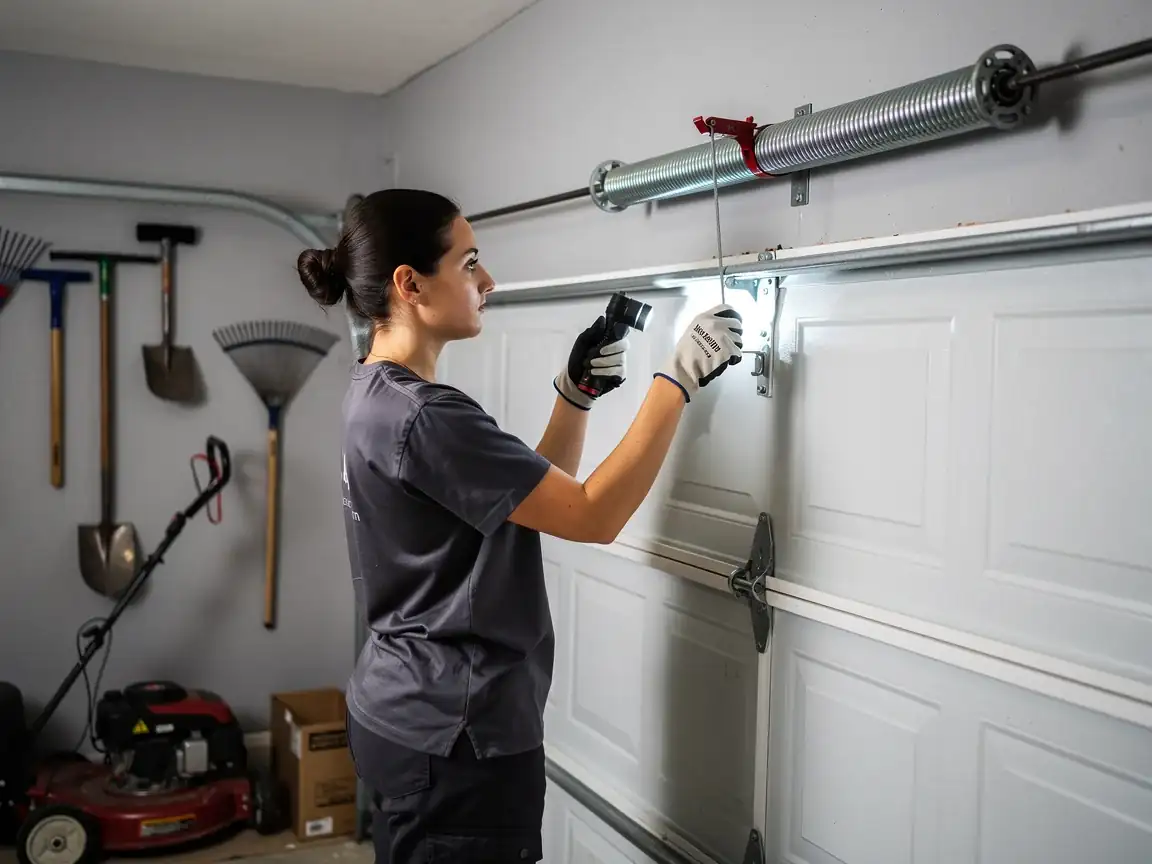
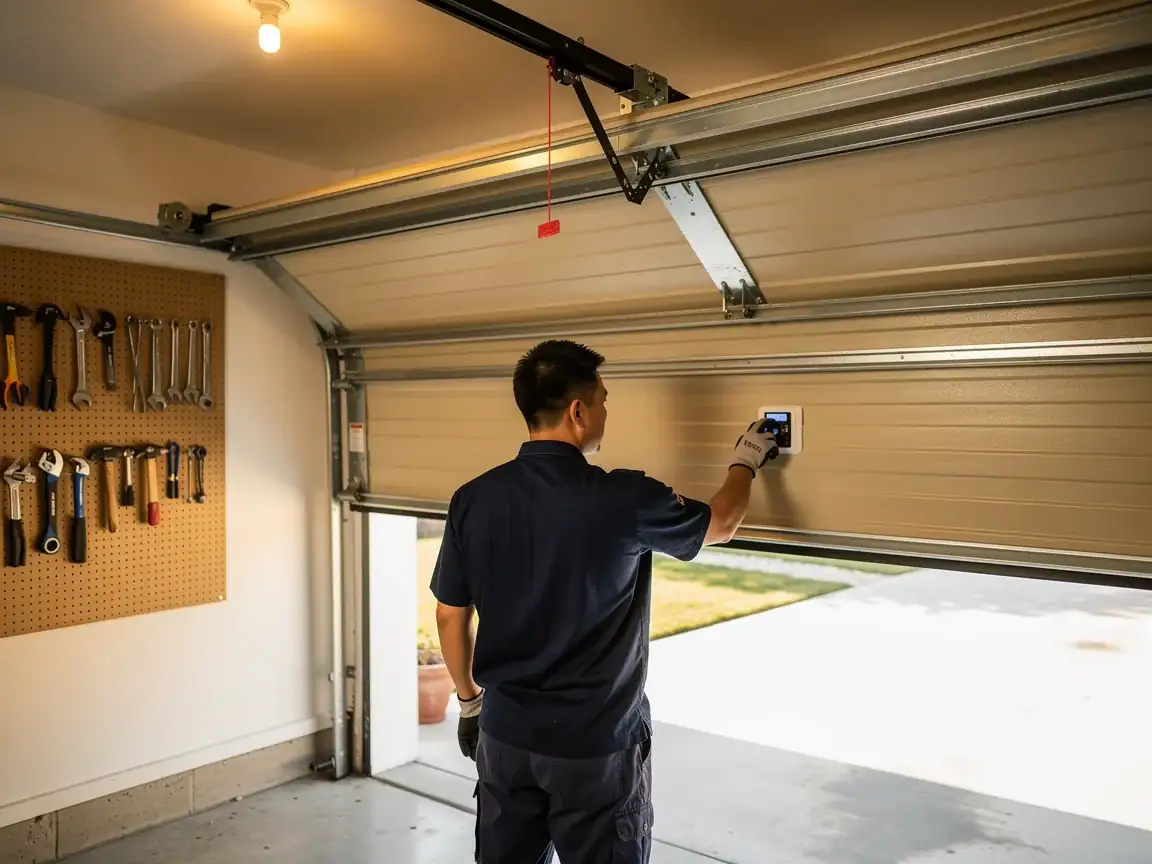
A technician tests the door under power and by hand and finds what actually failed.
03
Clear, up-front plan
You get the fix that’s needed and what drives the cost - before any work starts.
04
Repaired & tested
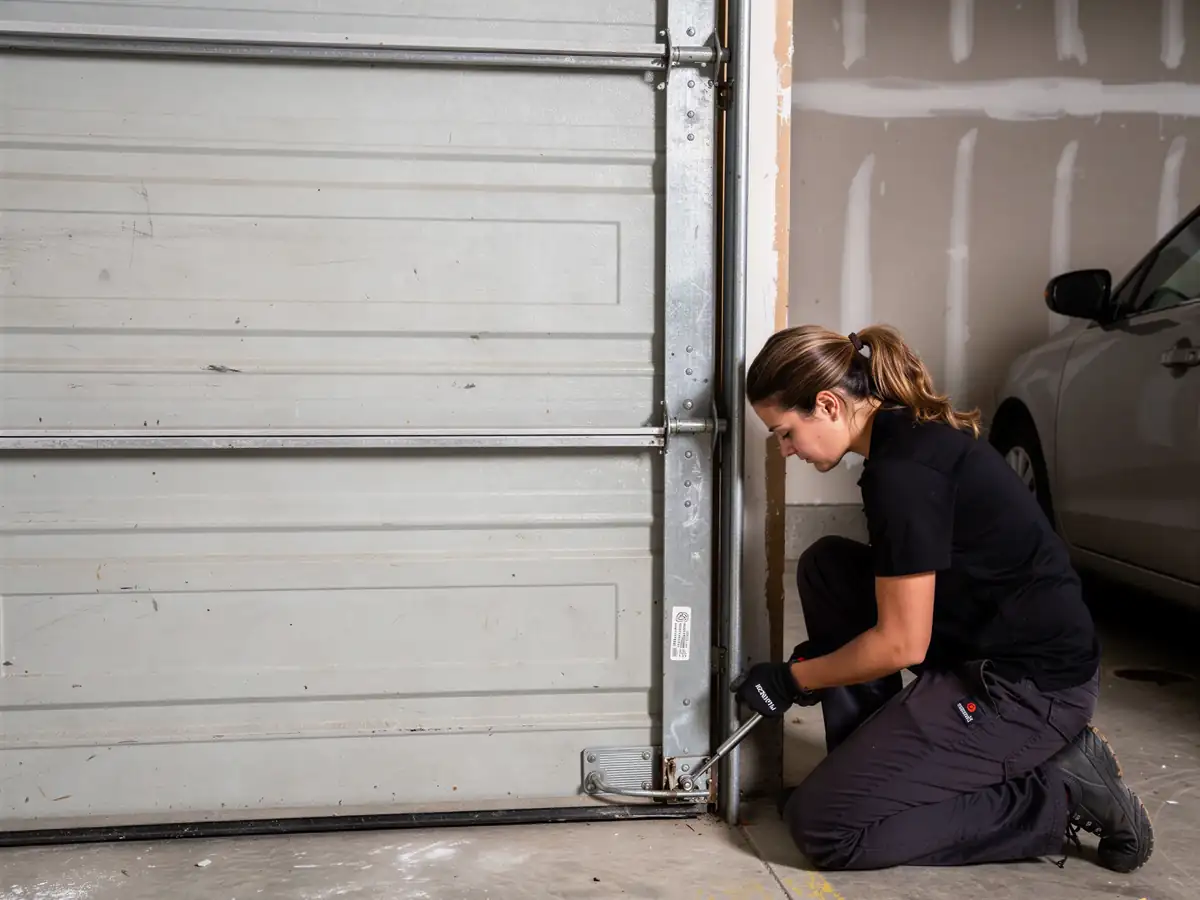
The repair is done, the door is set true and tested, and the work area left clean.
Not sure which repair your door needs in Estero, FL? Describe what it’s doing - every job starts with a diagnosis.
Why did my spring break on the one cold night we had all year?
It's rarely the cold alone. A spring that's been flexing through a humid Estero summer is already fatigued, and a sudden temperature drop is often just the final stress that finishes it off. The real cause is usually months of heat and moisture working on the coil beforehand.
Is my spring original to the house?
If your house was built in the 1980s or 90s, which covers most of the stock in this area, and nobody's mentioned a garage door spring replacement to you, it's very likely original. Thirty-plus years of Gulf Coast humidity on a torsion spring is a long run for any coil.
Do I need two springs or one?
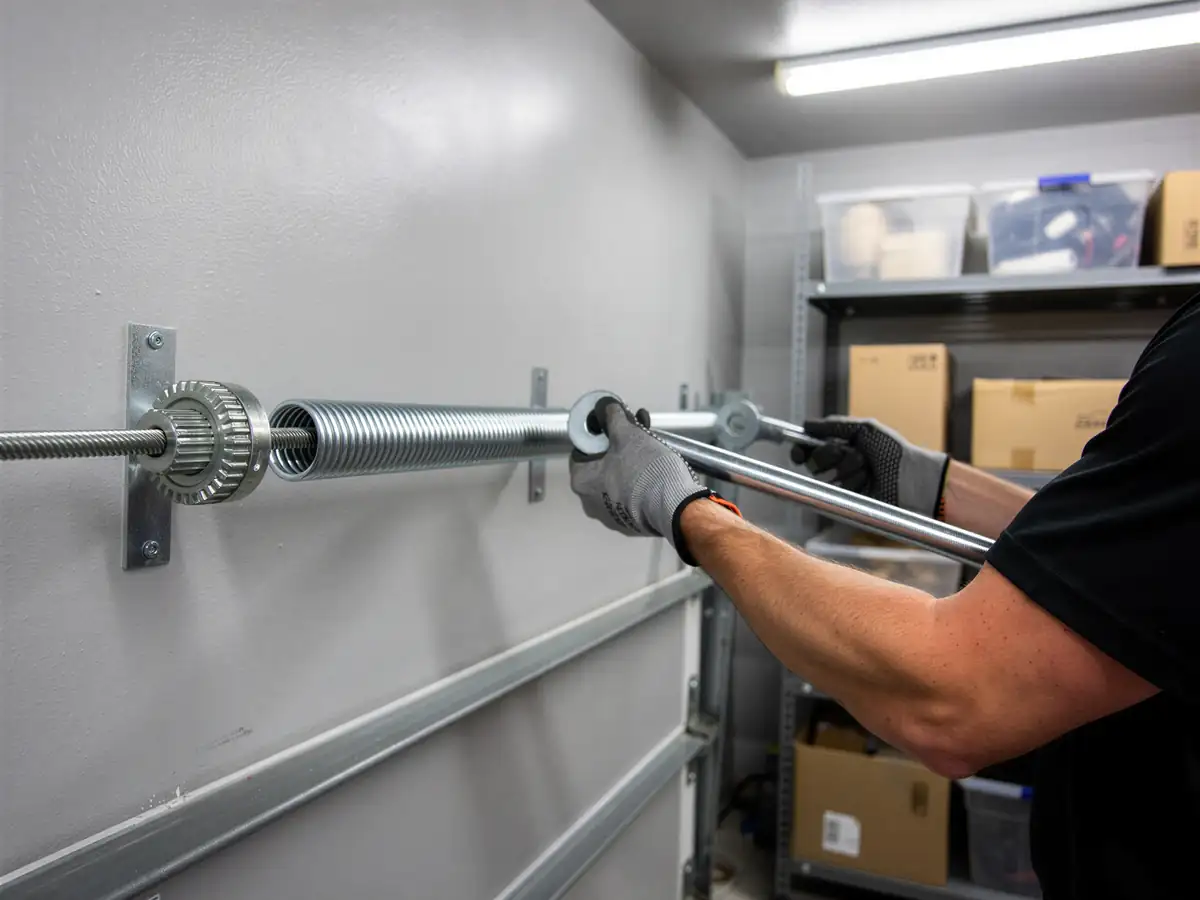
Most double garage doors built in this era use two torsion springs, one on each side of the shaft. If only one has broken, the other is usually close behind from the same age and the same conditions, which is why we generally recommend replacing both at once.
Can I just lubricate the spring instead of replacing it?
Lubrication slows corrosion, it doesn't reverse fatigue that's already in the coil. If a spring is cycling loudly or sagging unevenly, oil will quiet it down for a week or two, not fix what's actually wrong with the steel.
Ready to get your garage door sorted?
Tell us what it’s doing and where you are in Estero - we’ll take it from there.